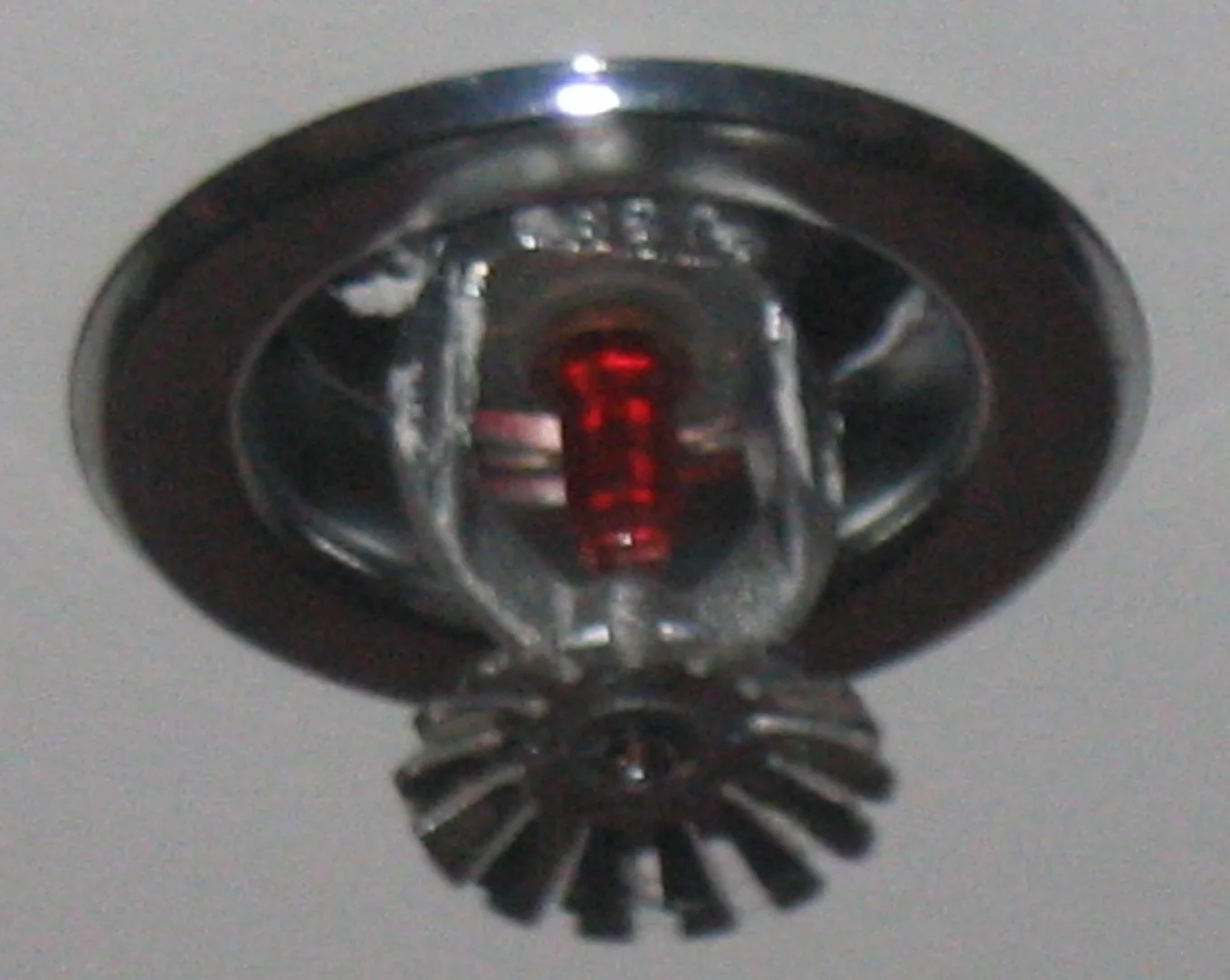
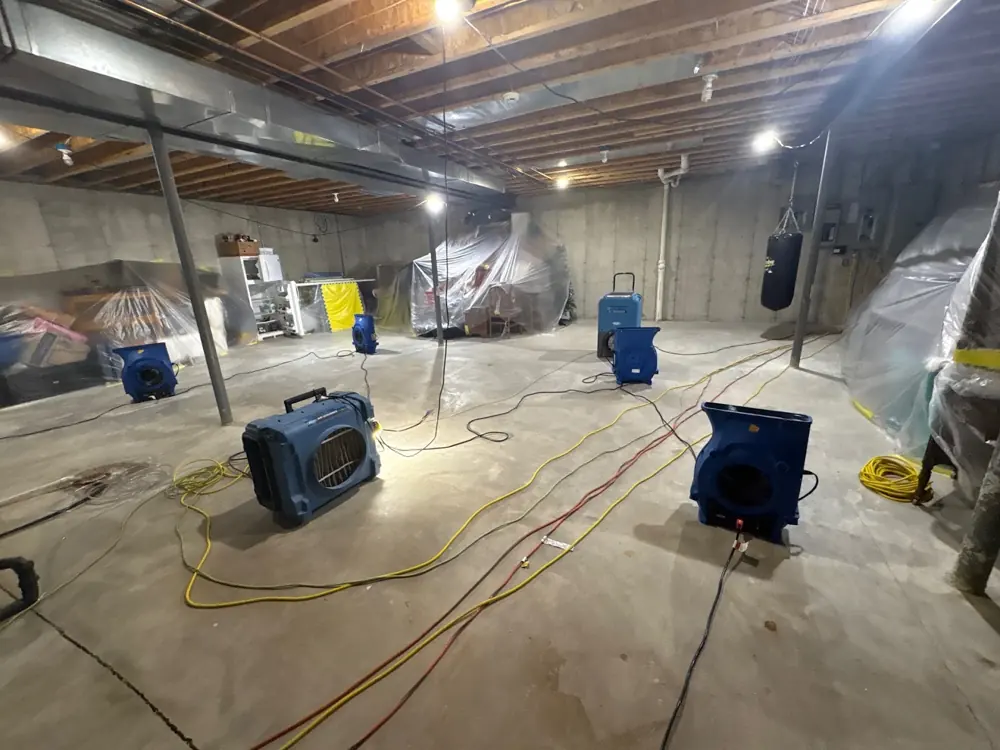
A discharged fire sprinkler releases a heavy, steady flow that floods floors and soaks walls within minutes. Local crews extract the water, dry the structure, and document the loss, on site in about an hour, any hour, day or night.

The crew confirms the sprinkler system is shut off at the riser and the flow has stopped, so the building is dried against a stopped source rather than water that is still running.
Truck-mounted extractors and pumps remove standing water from each affected floor, working from the top down to reach water that traveled between levels through ceilings and walls.
Wet ceilings, drywall, carpet, and insulation are opened where needed, and air movers with dehumidifiers dry the structure and salvageable contents to an IICRC-standard target.
Moisture meters confirm every affected level reads dry before equipment leaves, and photos plus the readings are packaged so the property insurance claim is well supported.

While help is on the way, these first steps, done only where it is safe, limit the damage and protect the insurance claim.
Shut the supply off at the source, or close the home's main valve if the source is not obvious. Stopping the flow limits the damage more than anything else.
Switch off electricity to the affected area, but only if the breaker can be reached without standing in or touching the water.
Get a crew dispatched right away. The sooner extraction and drying begin, the more flooring, drywall, and belongings can be saved.
Take photos and a short video of the water and the affected rooms before anything is moved, so the insurance claim starts strong.
Fire sprinkler discharge cleanup in Raleigh varies widely, often from about $3,000 to $15,000 or more, depending on how long the head ran, how many floors and units the water reached, and how much material and content must be dried or removed. A single head caught quickly sits lower, while a multi-floor commercial discharge sits high. Sudden discharges are commonly covered, and crews document each level for the carrier.
Crews reach Raleigh and Wake County fast, from Historic Oakwood, Five Points, and Mordecai to nearby Garner, Knightdale, Morrisville, Apex, and Wake Forest. See the full list on the areas served across Raleigh page.
See all areas servedEvery loss is photographed, measured, and logged from the first visit, so the paperwork holds up with your insurance carrier.
Technicians follow recognized IICRC drying standards and prove the work with daily moisture readings, not guesswork.
Emergency dispatch any hour of the day or night, with a real crew on the way, not a callback in the morning.
A real crew dispatched any hour, not a callback in the morning.
Trained technicians following recognized IICRC drying standards.
Truck-mounted, portable, and submersible for any size loss.
The loss is documented and billed to the carrier directly.
Get people out of the affected area and shut the system off at the riser valve, or have building maintenance or the fire department do it, since the head will keep running until the water is stopped there. Then call for extraction. The faster the flow stops and the water is pulled, the fewer floors and units it reaches.
Fire sprinklers are built to control a fire, so a single head delivers a strong, continuous flow, often tens of gallons per minute, and it does not stop until the system is shut off. That is why even an accidental discharge floods a floor quickly and, in a multi-story building, sends water down into the units below within minutes.
Often, because sprinkler water is usually clean rather than contaminated. Carpet, drywall, and many contents can be dried in place or restored when extraction is fast. Materials that soaked through or delaminated are removed. Crews sort salvageable from unsalvageable and document both so the claim reflects the true scope of the loss.
A sudden, accidental sprinkler discharge is commonly covered under a property policy, whether it followed a fire or an accidental trigger. Crews document the source, the affected levels, and the moisture readings so the adjuster has a clear, detailed record, which matters most on multi-unit and commercial losses where several parties are involved.
Raleigh crews are on call 24 hours a day, local and fast, and can be on the way within the hour.
Call (984) 217-6651