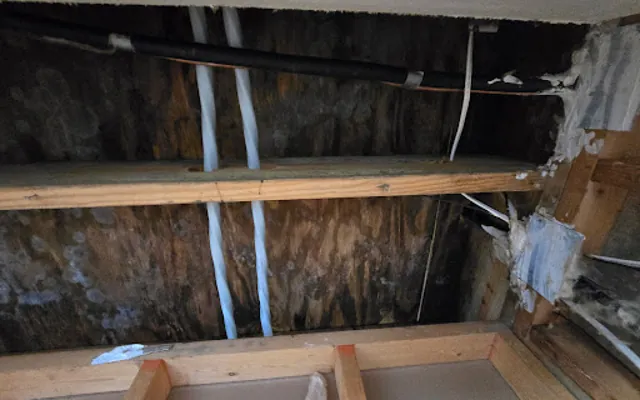
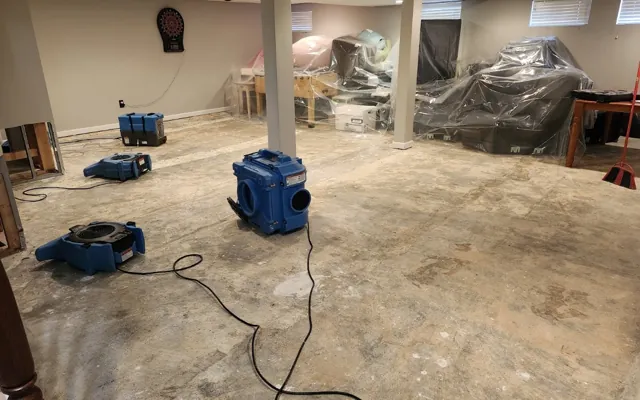
When an ice dam lets meltwater into the attic of a North Hills, NC home, local crews respond fast to extract the water and dry the structure, following IICRC-standard methods to stop secondary damage before it starts.

Technicians find where the water worked under the shingles into the attic space, a common path in North Hills homes. They confirm the active leaking has stopped before any drying setup begins.
The crew removes standing water from the attic. In many cases, they must open a section of soaked ceiling drywall or remove wet insulation to reach trapped moisture in the framing.
Using air movers and dehumidifiers, the team dries the attic, ceiling, and any wet wall cavities. They work to an IICRC-standard target, ensuring no dampness remains behind the finishes.

Ice dam water damage in North Hills is uncommon but usually runs from about $1,500 to $6,000 when it happens, depending on how much water entered, how far it spread into the attic and walls, and how much insulation and drywall must come out. A small entry caught early sits low, while a widespread attic soak sits higher. Sudden winter losses are commonly covered, and crews document the readings.
In North Hills, the mix of older ranches and dense new Midtown construction faces a shared winter risk: ice dams. On pitched roofs, snowmelt refreezes at the eaves, trapping water that can work under shingles and soak attic insulation, framing, and ceilings. The potential for damage spans both classic homes and stacked condos. The Piedmont's humid subtropical climate brings winter freezes and thaws. In North Hills, this cycle on a roof can quickly form ice dams, especially on the area's many ranches and gabled condo buildings, where trapped meltwater finds its way inside. From North Hills, crews also cover nearby Coley Forest, Method, Country Club Hills, Drewry Hills, Vanguard Park, Anderson Heights. See every neighborhood and town on the full service area page.
See all areas servedEvery loss is photographed, measured, and logged from the first visit, so the paperwork holds up with your insurance carrier.
Technicians follow recognized IICRC drying standards and prove the work with daily moisture readings, not guesswork.
Emergency dispatch any hour of the day or night, with a real crew on the way, not a callback in the morning.
A real crew dispatched any hour, not a callback in the morning.
Trained technicians following recognized IICRC drying standards.
Truck-mounted, portable, and submersible for any size loss.
The loss is documented and billed to the carrier directly.
While less common than plumbing leaks, it happens during winter freezes and thaws, especially on homes with pitched roofs. Local crews see it on older ranches and newer condo buildings in the area when conditions align.
Technicians use air movers and dehumidifiers to dry the attic space, ceiling, and any wet wall cavities. They monitor with moisture meters until all materials, including framing and insulation, read dry to an IICRC-standard target.
Crews are on call 24 hours a day and can be on the way to North Hills within the hour.
Call (984) 217-6651