When an HVAC condensation leak stains a Downtown Raleigh, NC ceiling, local crews respond fast to extract water and dry the area to IICRC-standard targets, helping stop moisture from spreading in older buildings.

Technicians trace the water to its source, whether a blocked line, a rusted pan, or a poorly pitched unit in a Downtown Raleigh attic. They stop the overflow before any drying equipment is brought in.
The crew extracts standing water from the drain pan area, ceiling, or floor. If moisture is trapped, they may open a small section of wet drywall or remove damp insulation to allow for proper drying.
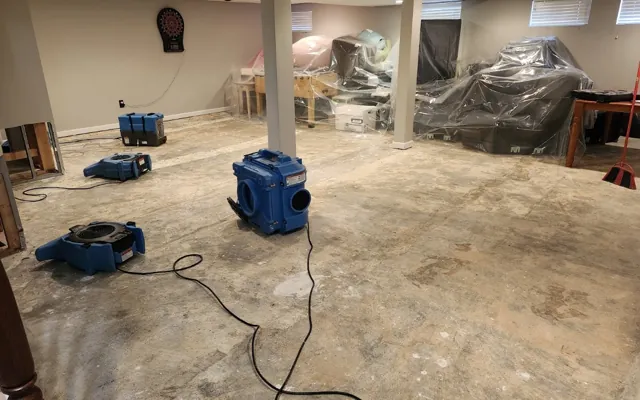
Using air movers and a dehumidifier, the team dries the affected cavity to IICRC-standard targets. Moisture meters confirm the framing, drywall, and insulation are all dry before equipment is removed from the home.

An HVAC condensation leak in Downtown Raleigh usually runs from about $800 to $3,500, depending on how long the leak ran, where the unit sits, and how much ceiling, insulation, or framing was affected. A caught-early condensate clog sits low, while a full-season attic overflow that stained the ceiling and soaked insulation sits higher. Sudden overflow losses are commonly covered, and crews document the readings for the carrier.
Downtown Raleigh's mix of historic homes and newer apartments means HVAC units often sit in closets or attics above living spaces. A condensate line clog in an upper-floor unit can send water down through floors fast, especially in buildings with old cast-iron drains common in the district. In Downtown Raleigh, NC, the humid subtropical climate keeps HVACs running for months. This strains condensate lines, and in older structures, a single clog can let overflow travel between floors via stacked plumbing chases, while nearby creek drainage adds background moisture. From Downtown Raleigh, crews also cover nearby Boylan Heights, Glenwood-Brooklyn, Historic Oakwood, South Park, Mordecai, Cameron Park. See every neighborhood and town on the full service area page.
See all areas servedEvery loss is photographed, measured, and logged from the first visit, so the paperwork holds up with your insurance carrier.
Technicians follow recognized IICRC drying standards and prove the work with daily moisture readings, not guesswork.
Emergency dispatch any hour of the day or night, with a real crew on the way, not a callback in the morning.
A real crew dispatched any hour, not a callback in the morning.
Trained technicians following recognized IICRC drying standards.
Truck-mounted, portable, and submersible for any size loss.
The loss is documented and billed to the carrier directly.
For a leak in Downtown Raleigh, NC, costs often range from about $800 to $3,500. A simple, early-caught clog is at the lower end, while a long-running attic overflow that soaked insulation and stained ceilings would be higher. Sudden overflow is commonly covered by insurance.
Technicians only open a section if moisture meters show water is trapped inside a wall or ceiling cavity, which is common in stacked Downtown Raleigh units. The goal is to reach and dry the framing and insulation to prevent mold, and the opening is kept as small as possible.
Crews are on call 24 hours a day and can be on the way to Downtown Raleigh within the hour.
Call (984) 217-6651